
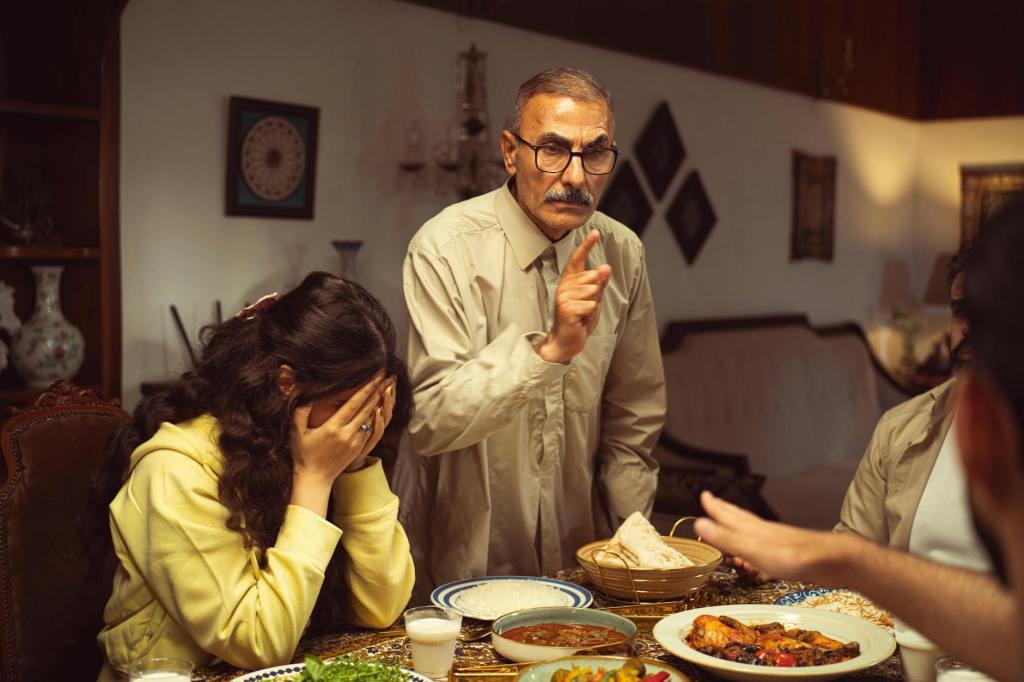
“Do you know how much I sacrificed to come to the United States to give you a better life?”
It’s a phrase many Latino children have heard growing up—and one that carries deep truth, love, and sacrifice.
But what happens when that sacrifice creates a life so different that parents and children begin to struggle to understand each other?
The Unspoken Tension Between Generations
For many immigrant families, survival was the priority.
Parents who grew up in difficult conditions—often in under-resourced countries, political instability, or poverty—learned to focus on what was necessary:
- Work hard
- Stay strong
- Keep moving forward
There wasn’t space to process emotions. There wasn’t time to ask, “How do I feel?”
So when their children, raised in the United States, begin to explore emotions, boundaries, and mental health, it can feel confusing—or even frustrating.
From the parent’s perspective:
“We didn’t have mental health problems. We just handled things.”
From the child’s perspective:
“You gave me a better life—and part of that is having the space to understand myself.”
The Misunderstanding: Strength vs. Emotional Awareness
Many Latino parents equate emotional expression with weakness because, in their reality, survival required suppression.
But emotional awareness is not the opposite of strength—it’s a different kind of strength.
Children raised in a more stable environment often have the privilege to:
- Reflect on their emotions
- Question patterns
- Seek healing
- Want healthier relationships
This isn’t a rejection of their parents’ sacrifices. It’s actually a result of those sacrifices.
Why It Can Feel Like Resentment
To a parent, it might feel like:
- “You have everything, and you’re still unhappy.”
- “We went through worse and didn’t complain.”
- “Why are you focusing on feelings instead of being grateful?”
But for the child, it can feel like:
- “I’m not allowed to struggle.”
- “My emotions are being dismissed.”
- “I have to choose between being grateful and being honest.”
This creates a painful disconnect.
The Role of Anger in Latino Culture
In many Latino households, anger becomes the only acceptable emotion.
Why?
Because:
- Sadness can feel like weakness
- Fear can feel unsafe to express
- Vulnerability may not have been modeled
So emotions don’t disappear—they just get redirected.
This is part of why we see higher rates of:
- Depression
- Substance use
- Domestic conflict
Not because Latino families are “weaker,”
but because emotions were never given a safe place to exist.
Two Realities Can Be True at Once
This is where healing begins:
- Parents did sacrifice deeply
- Children are allowed to feel deeply
Both can exist without canceling each other out.
Gratitude and pain are not opposites.
They can live in the same space.
Reframing the Narrative
Instead of:
- “You’re too sensitive”
What if it became:
- “You’re able to feel things I never had the chance to process”
Instead of:
- “We didn’t struggle like that”
What if it became:
- “We struggled differently”
What This Means for Healing
For parents:
- Emotional awareness is not disrespect
- It’s a continuation of the life you worked hard to create
For children:
- Your parents’ survival mode shaped them
- Their limitations are not a reflection of your worth
For both:
- There is an opportunity to understand—not just react
You Are the Bridge Between Generations
If you’re part of this newer generation, you carry something powerful:
You understand survival and emotional awareness.
That puts you in a unique position to:
- Break cycles
- Build healthier relationships
- Redefine strength
Not by rejecting your roots—
but by expanding them.
Final Thought
Your parents gave you a better life.
And part of that “better life” is this:
The ability to feel.
The ability to reflect.
The ability to heal.
That’s not weakness.
That’s evolution.
Call to Action
If this resonates with you, you’re not alone.
At Willow & Sage Counseling, we help individuals navigate the space between survival and emotional awareness—without shame, and without choosing one over the other.
You don’t have to choose between honoring where you come from and becoming who you’re meant to be.
Reach out today to begin that process.
 Willow & Sage Counseling
Leave a comment